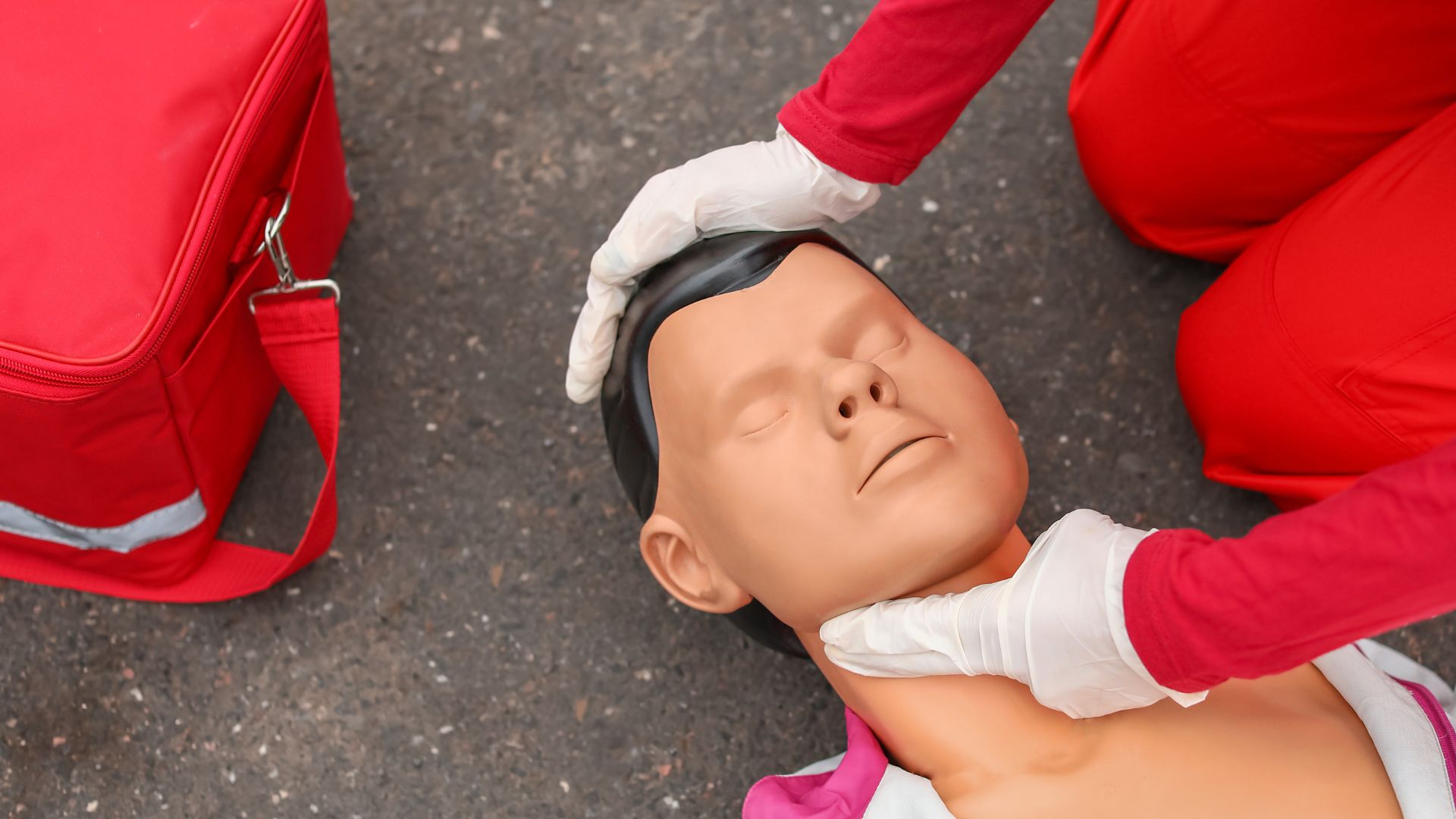
In a fast-moving city like New York City, a sudden collapse can happen anywhere. On a subway platform, in an office building, at a restaurant, or walking down the street. When it does, the people nearby become the first line of response.
In those first few minutes, before emergency responders arrive, what you do matters. Knowing how to perform CPR and use an AED can mean the difference between life and death. That is why learning these skills through an in-person CPR Certification course is one of the most valuable things you can do.
What Causes Sudden Collapse?
Sudden collapse is often the result of cardiac arrest, a condition where the heart suddenly stops beating effectively. This is different from a heart attack and requires immediate intervention.
When cardiac arrest occurs:
- The heart stops pumping blood
- Oxygen no longer reaches the brain
- The person becomes unresponsive within seconds
According to New York City Department of Health, CPR is a life-saving technique used when someone’s breathing or heartbeat stops, helping maintain circulation until help arrives.
Without immediate action, survival chances drop rapidly.
The Reality of Cardiac Arrest in NYC
New York City sees tens of thousands of life-threatening medical emergencies each year, including cardiac arrests.
The challenge is response time. Even in a city with advanced emergency services:
- Average response times can exceed several minutes
- Brain damage can begin within 4 to 6 minutes without oxygen
- Survival rates remain low without immediate intervention
In fact, fewer than 10% of sudden cardiac arrest victims in NYC survive.
This highlights why bystander action is so critical.
Why Bystander CPR Is So Important
Bystander CPR is CPR performed by someone nearby before emergency responders arrive. It is one of the most important factors in survival.
Research shows:
- Immediate CPR can double or triple survival chances
- Survival is significantly higher when CPR is performed early
- Many victims do not receive CPR quickly enough
In NYC, less than one-third of cardiac arrest victims receive bystander CPR.
This gap is one of the biggest reasons survival rates remain low.
Recognizing a Sudden Collapse
Knowing when to act is just as important as knowing how to act. If someone collapses, you should immediately assess the situation.
Signs of cardiac arrest include:
- The person is unresponsive
- They are not breathing or only gasping
- There is no pulse
If you notice these signs, you should act immediately.
What To Do When Someone Collapses
When someone suddenly collapses in NYC, every second counts. Your response should follow a clear sequence.
Step 1: Call 911 Immediately
Activate emergency services as quickly as possible. In NYC, this ensures the fastest possible response from EMS.
Step 2: Start CPR
Begin chest compressions right away. Push hard and fast in the center of the chest.
Step 3: Use an AED if Available
If an AED is nearby, turn it on and follow the instructions. AEDs are designed to guide you step by step.
These three actions form the core of the “chain of survival,” which is critical for improving outcomes.
What Is an AED and Why It Matters
An AED, or Automated External Defibrillator, is a device that can restore a normal heart rhythm during cardiac arrest.
AEDs:
- Analyze the heart’s rhythm
- Deliver a shock if needed
- Provide voice instructions for users
According to New York State Department of Health, survival depends on calling 911, starting CPR, and using an AED as quickly as possible.
When used within the first few minutes, AEDs can dramatically increase survival rates.
The Problem: AED Awareness Is Low
Despite their importance, many people do not know where AEDs are located or how to use them.
Studies show:
- Only about half of people can locate an AED in their workplace
- AEDs are underused in emergencies
- Many bystanders hesitate due to lack of training
This lack of awareness can delay life-saving treatment.
Why Timing Is Everything
During cardiac arrest, time is the most important factor.
Without intervention:
- Survival chances decrease by about 10% per minute
- Brain damage can begin within minutes
- Delays significantly reduce recovery outcomes
In NYC, where response times can be affected by traffic and call volume, bystander action is even more critical.
Acting immediately can bridge the gap until help arrives.
Why People Hesitate to Help
Even when people recognize an emergency, many hesitate to act. This hesitation is one of the biggest barriers to survival.
Common reasons include:
- Fear of doing something wrong
- Lack of confidence
- Uncertainty about CPR or AED use
Surveys show that while many people have heard of CPR, far fewer feel confident using it or an AED.
This hesitation can cost valuable time.
How In-Person Training Eliminates Hesitation
The best way to overcome hesitation is through hands-on training. In-person CPR training prepares you for real emergencies by building both skill and confidence.
In a hands-on class, you:
- Practice chest compressions on mannequins
- Learn correct technique and rhythm
- Receive immediate feedback from instructors
This training builds muscle memory, allowing you to act quickly without second-guessing yourself.
Choosing an in-person CPR Certification course ensures you are ready to respond, not just aware of what to do.
The Importance of CPR Quality
Not all CPR is equally effective. Research shows that the quality of CPR significantly impacts survival outcomes.
Effective CPR requires:
- Proper compression depth
- Consistent rhythm
- Minimal interruptions
Studies have found that effective CPR can increase survival odds multiple times compared to ineffective CPR.
This is why proper training is essential.
Why NYC Needs More Trained Bystanders
New York City is one of the most densely populated places in the country. This creates both challenges and opportunities.
Challenges:
- High volume of emergencies
- Delayed response times in crowded areas
Opportunities:
- More people nearby to help
- Greater potential for immediate response
If more New Yorkers were trained in CPR and AED use, survival rates could improve significantly.
Real-Life Scenarios in NYC
Sudden collapse can happen in everyday situations across the city:
- A commuter collapsing on the subway
- A customer experiencing cardiac arrest in a restaurant
- A coworker collapsing in an office
In each of these scenarios, the outcome depends on how quickly someone nearby takes action.
The Role of Public Awareness
Increasing CPR and AED awareness is a key priority for improving survival rates in NYC.
Initiatives across the city aim to:
- Train more residents in CPR
- Increase access to AEDs
- Encourage bystander intervention
Programs like CPR training kiosks and community classes are helping bridge this gap.
The more people who are trained, the safer the city becomes.
Why You Should Learn CPR in NYC
Learning CPR is not just about personal preparedness. It is about contributing to the safety of your community.
By being trained, you can:
- Save a life in an emergency
- Help reduce response time
- Increase survival chances for others
In a city like NYC, where people are constantly surrounded by others, your training can make a real difference.
Final Thoughts on Bystander CPR and AED Use in NYC
Sudden collapse is unpredictable, but your response does not have to be. In New York City, where emergencies can happen anywhere, being prepared is essential.
Bystander CPR and AED use are the most powerful tools available in those critical first minutes. They can keep someone alive until professional help arrives and dramatically improve survival outcomes.
By enrolling in an in-person CPR Certification course, you gain the skills, confidence, and readiness needed to act when it matters most. In NYC, that training could mean the difference between life and death.
Frequently Asked Questions About CPR and AED Use
What should I do if someone collapses in NYC?
Call 911, start CPR immediately, and use an AED if one is available.
What is an AED?
An AED is a device that analyzes heart rhythm and delivers a shock if needed to restore a normal heartbeat.
How effective is bystander CPR?
It can double or triple survival chances when performed immediately.
Do I need training to use an AED?
AEDs provide step-by-step instructions, but training helps you act faster and more confidently.
Why is CPR so important in NYC?
Response times can vary, so immediate bystander action is critical for survival.
How can I learn CPR?
You can enroll in an in-person CPR certification course to gain hands-on experience and confidence.